


Gladiator Canada Digital Redesign
Role: Lead UI Design | Project: System Architecture, Brand Storytelling | Company: Whirlpool Canada
Gladiator’s Canadian digital experience did not reflect the strength of its modular ecosystem. Product lines were presented independently, driven by specifications rather than a cohesive system narrative. Relationships between components were unclear, scalability was under-communicated, and the brand’s premium positioning was diluted.
The architecture lacked a unifying structure to support category expansion or Canada’s bilingual requirements.
The Problem
A unified system framework was designed to reposition Gladiator as an integrated storage ecosystem rather than a collection of standalone products.
The new architecture established a consistent structural rhythm across category and system pages, clarified tier differentiation, and elevated presentation through lifestyle context and material detail. Bilingual resilience was built into the structure, ensuring clarity and parity across English and French executions.
The Solution
The Impact
•
The Impact
•
The Impact • The Impact •
The redesigned framework transformed how Gladiator presents its ecosystem in Canada. Modular relationships are now immediately legible, category growth is structurally supported, and premium positioning is reinforced through cohesive storytelling and visual consistency.
The platform now functions as a scalable foundation for future launches while maintaining clarity across both language markets.
Flex Cabinet System
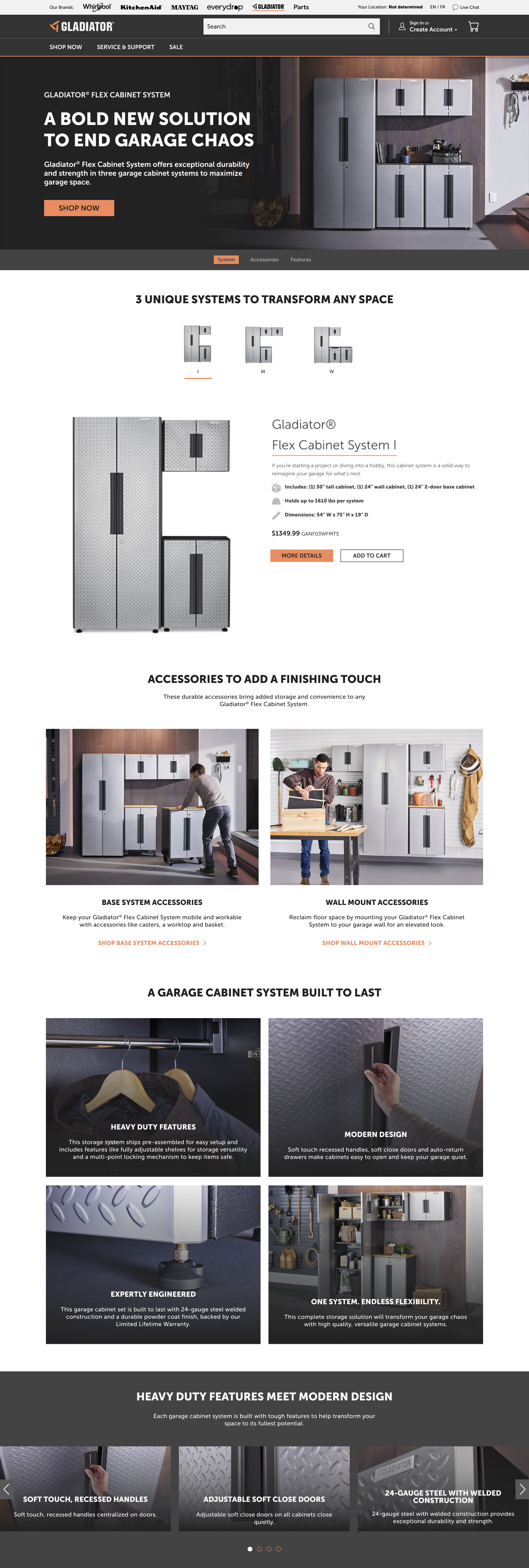
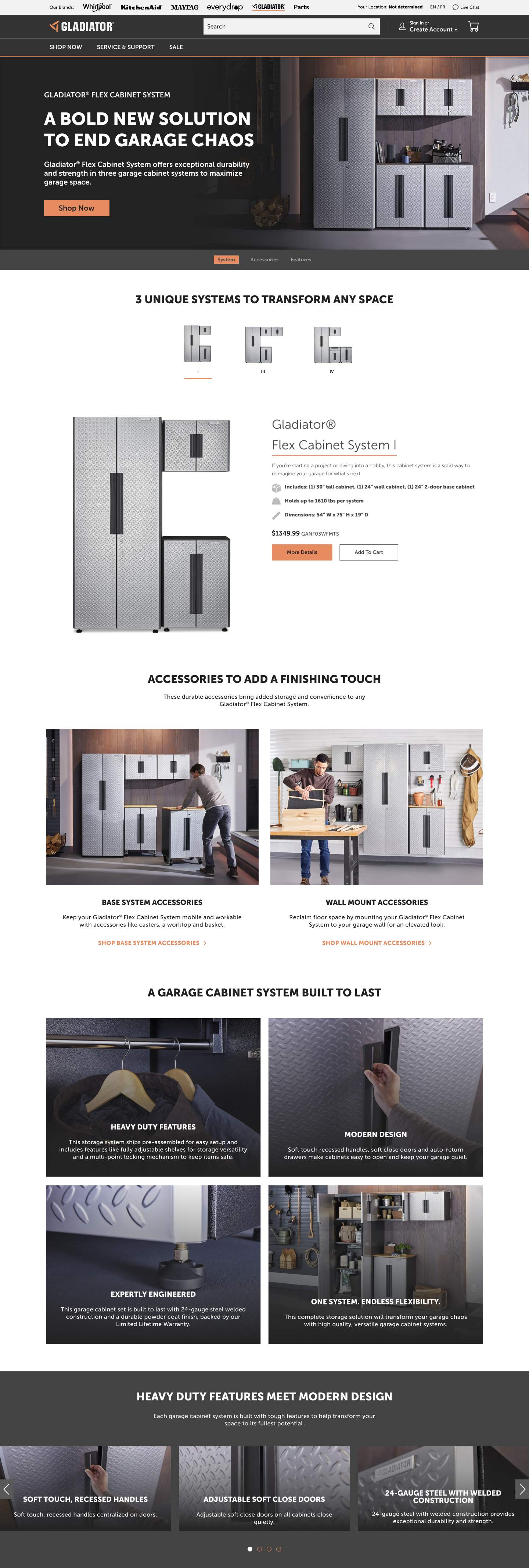
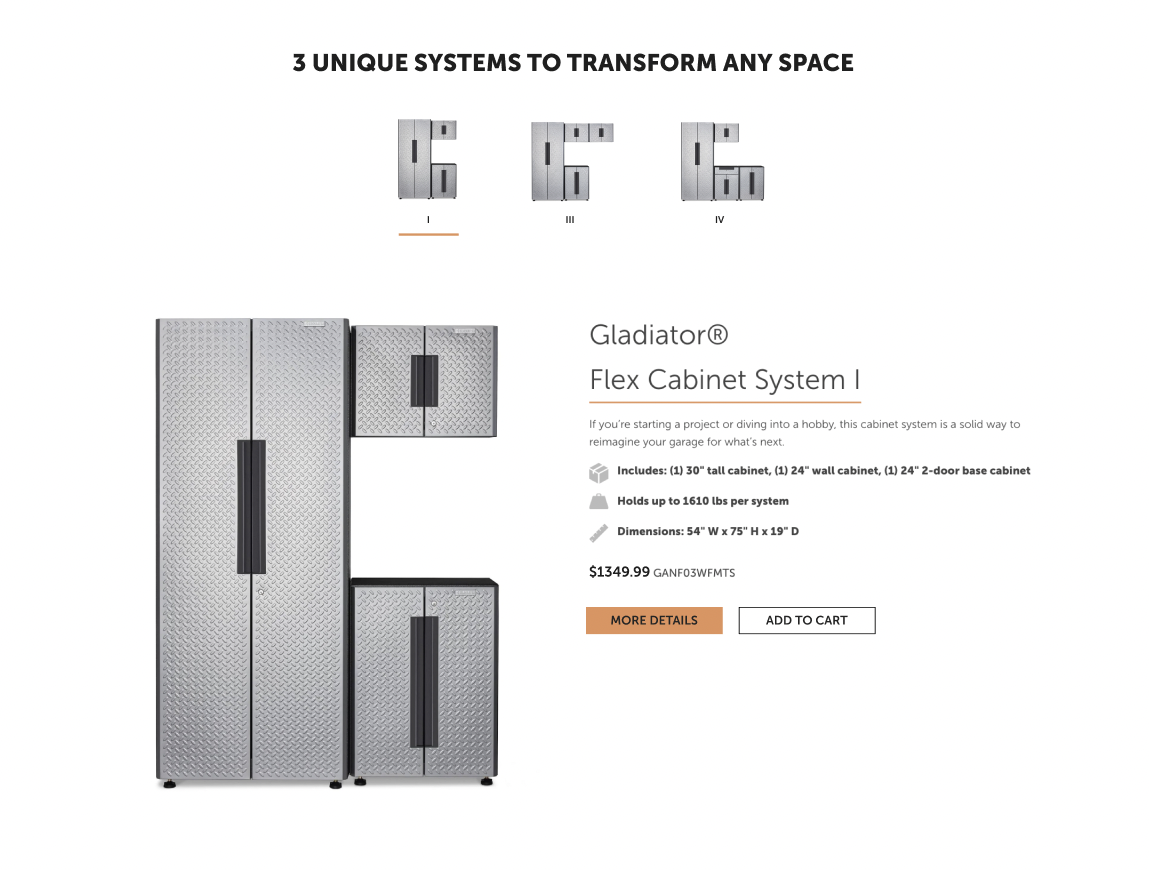
The Flex Cabinet System introduces a scalable storage solution designed to adapt across garage sizes and configurations. The core challenge was presenting multiple cabinet tiers without overwhelming users or flattening hierarchy.
The page establishes architectural clarity at the top, then progresses into configuration detail, accessory integration, and performance validation. Tier differentiation is handled visually rather than textually, allowing users to understand the logic instantly.
Focus
– Defined clear visual tier differentiation across configurations
– Positioned scalability as the primary narrative driver
– Integrated accessory expansion without fragmenting flow
Wall Organization
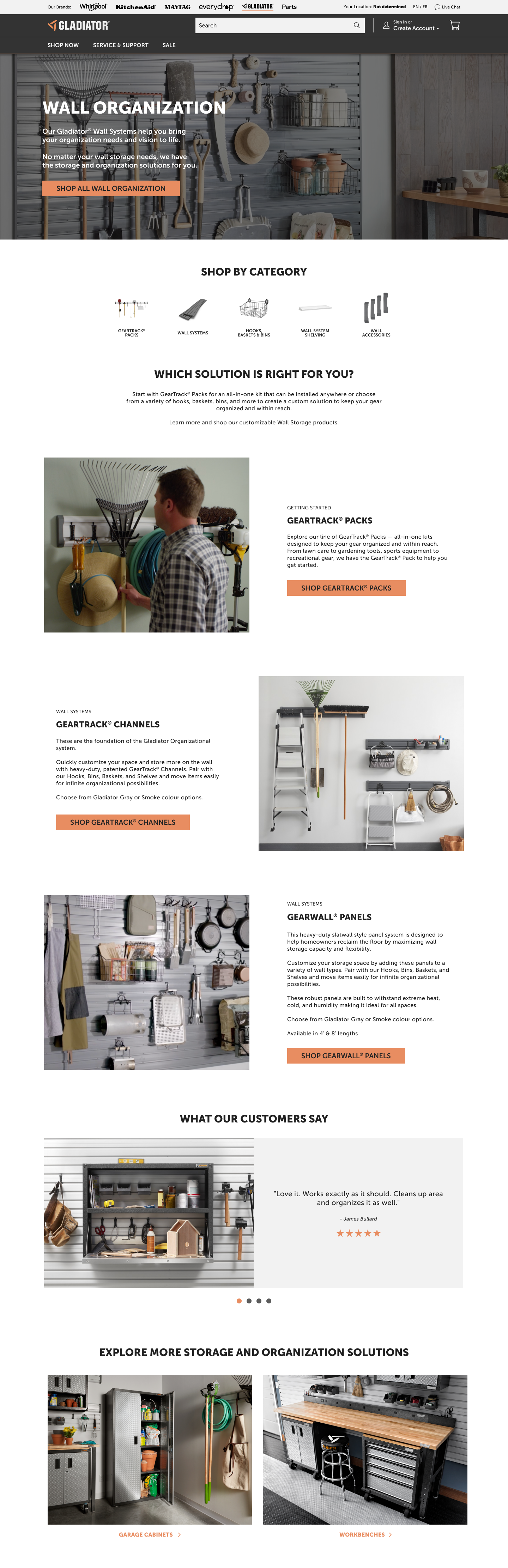
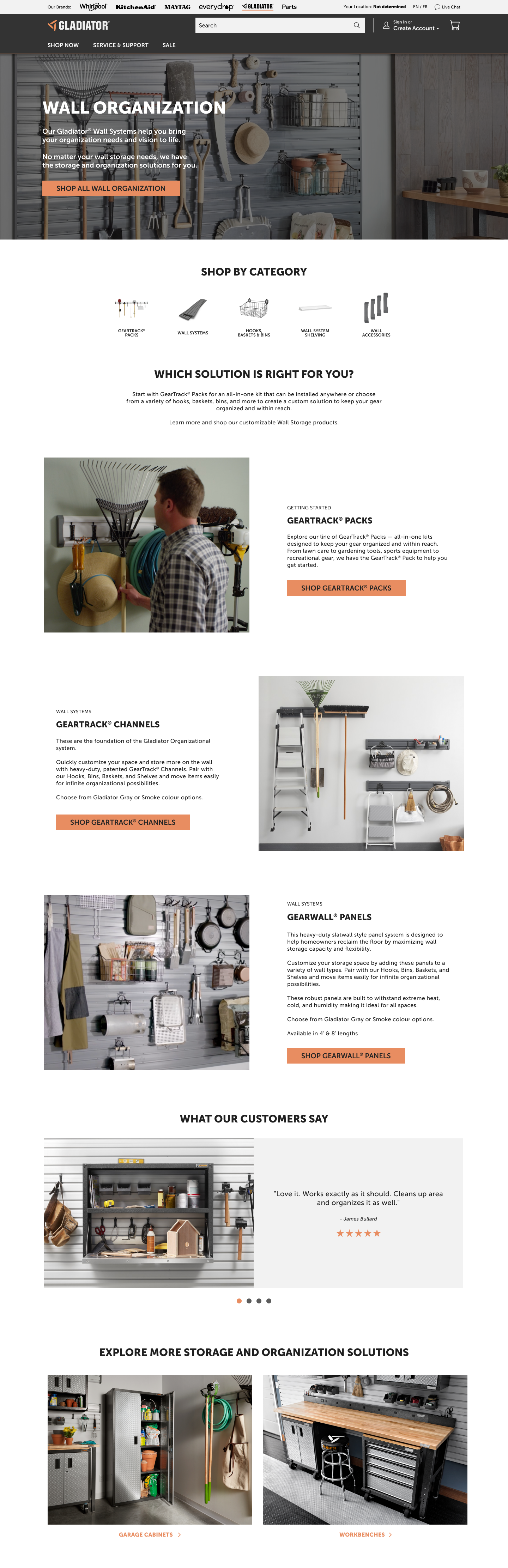
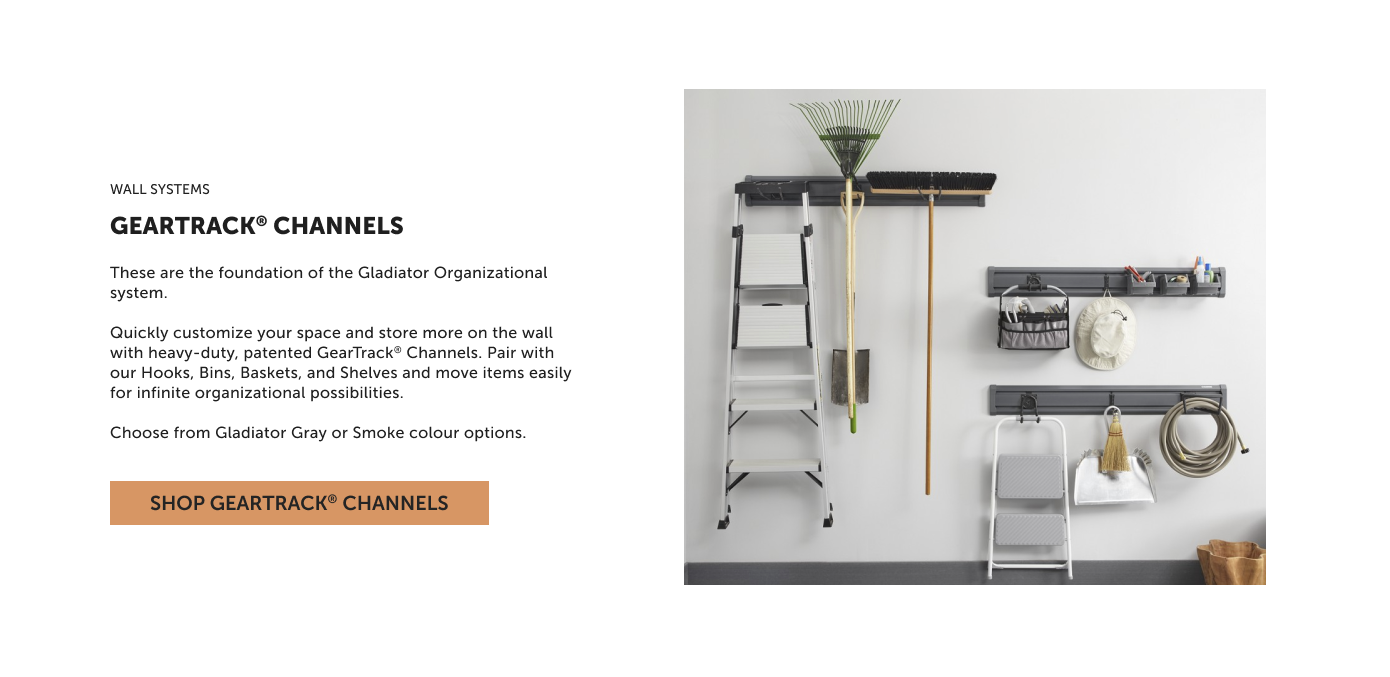
The Wall Organization page simplifies a component-heavy category built around rails, panels, and attachments. Without structure, this type of offering can quickly become visually dense and cognitively taxing.
The experience introduces the system concept first, then guides users through solution selection before surfacing individual modules. Comparison sections clarify the distinction between GearTrack and GearWall while maintaining a cohesive premium tone.
Focus
– Reduced cognitive load within a component-driven category
– Shifted from product-first to system-first storytelling
– Structured comparisons to support confident decision-making
Appliances / Supporting Categories
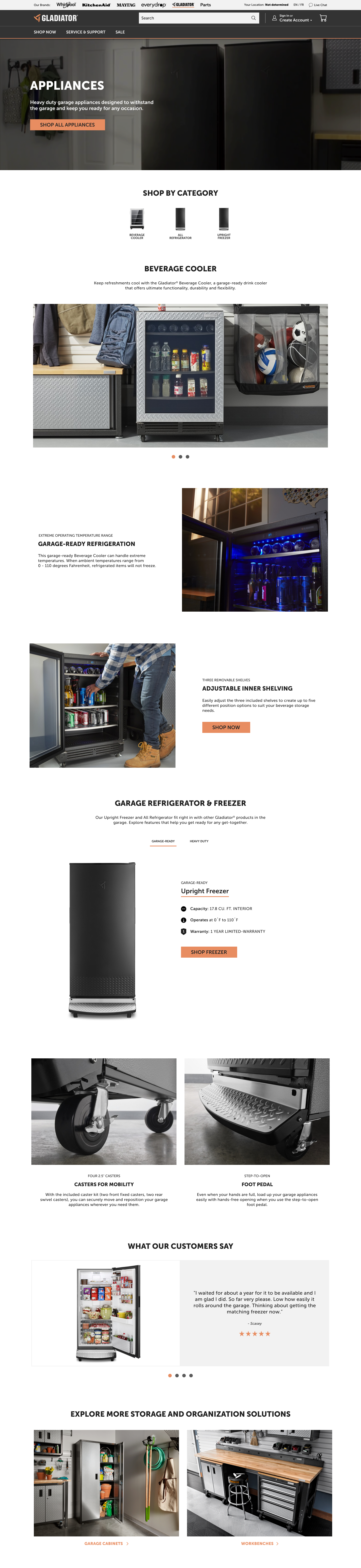
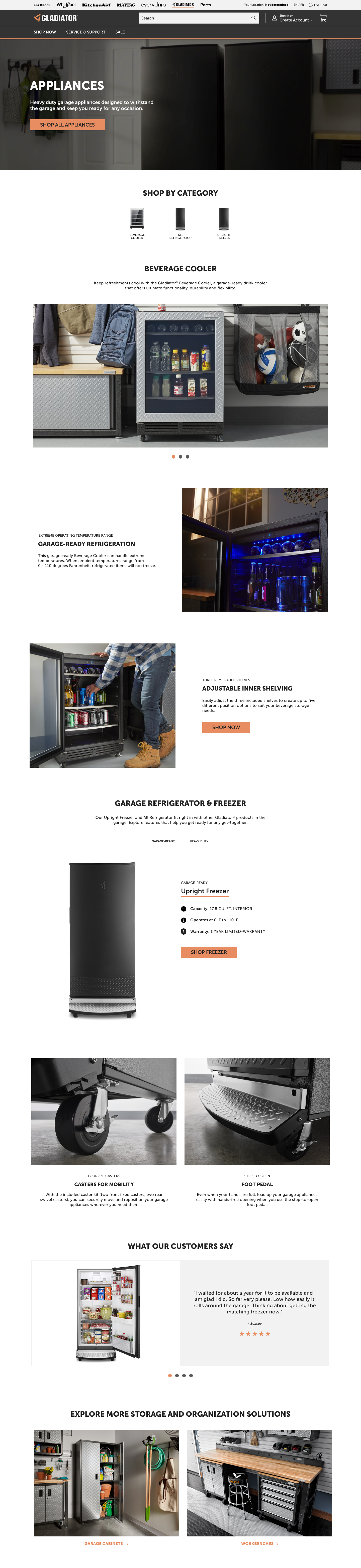
Additional category pages apply the same structural rhythm while adapting to varying product complexity. While the framework remains consistent, module emphasis shifts depending on whether the product is system-led, feature-led, or lifestyle-led.
This approach preserves cohesion across the ecosystem while allowing flexibility in content depth.
Focus
– Extended a scalable framework across categories
– Maintained structural and visual consistency
– Adapted module emphasis based on product type
– Preserved brand tone across varying complexity
Workbenches
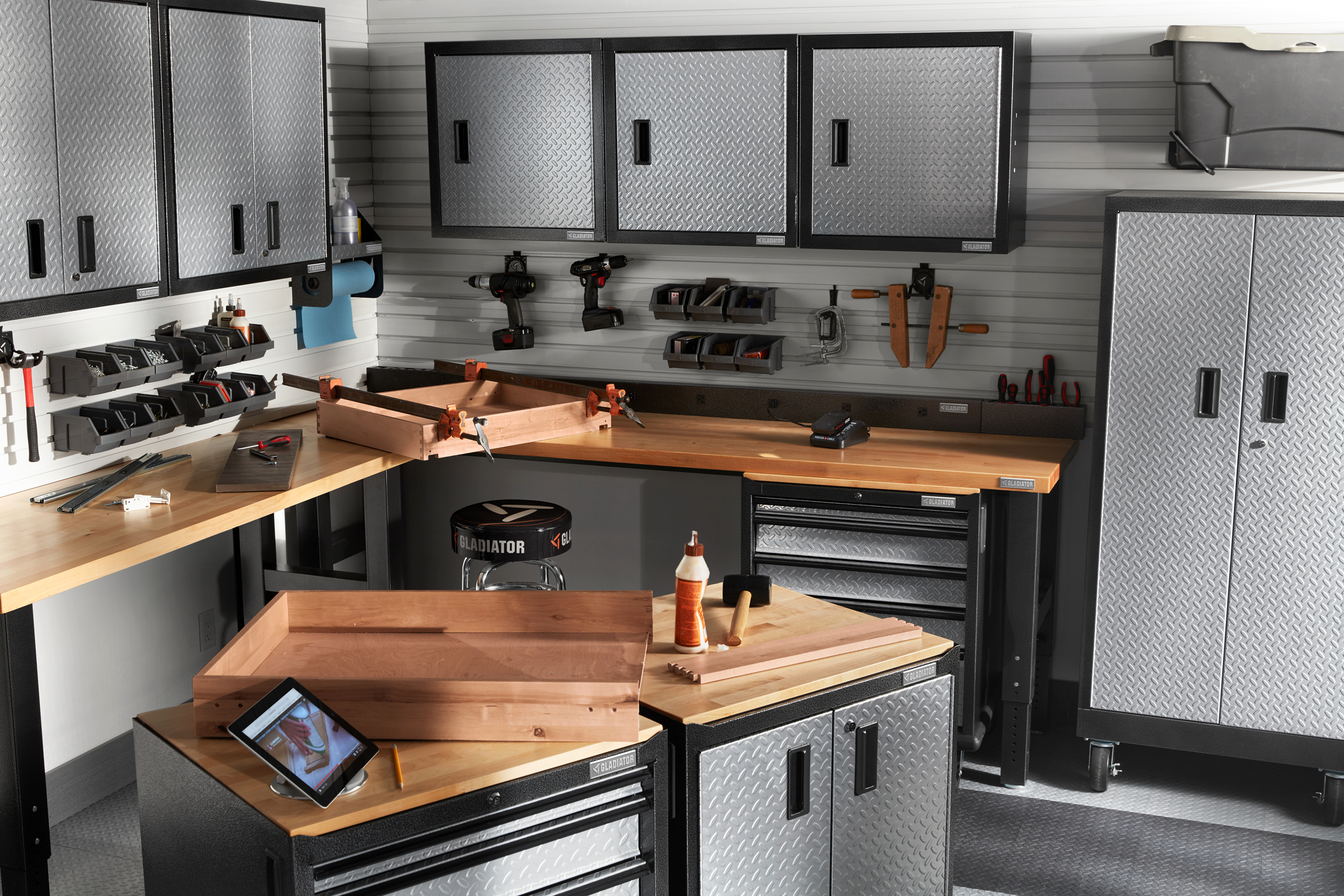
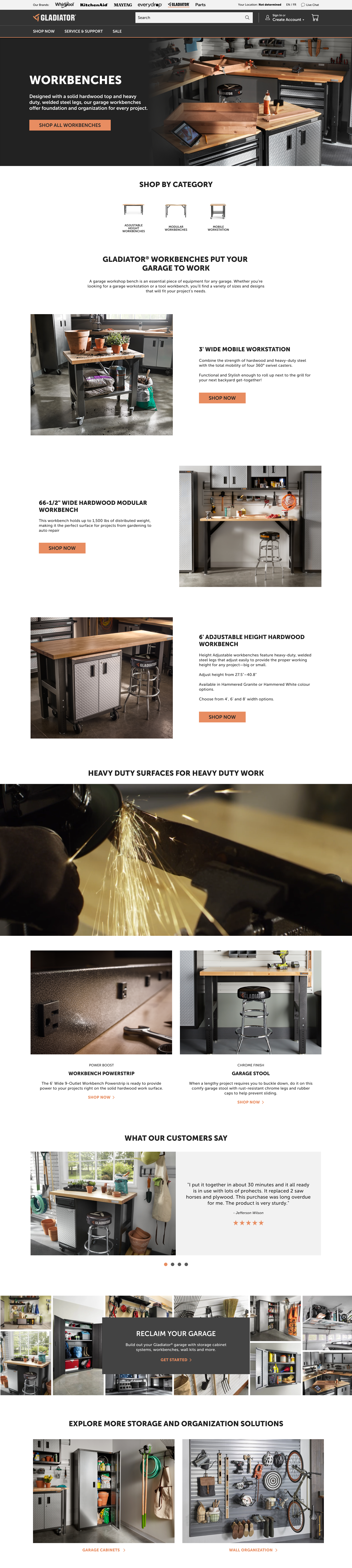
The Workbenches page reframes the category from purely functional to workspace-driven. Rather than leading with specifications, the experience establishes context through lifestyle imagery and material depth.
Feature modules are layered to balance craftsmanship and performance. Close-up photography reinforces build quality, while video integration adds dimension without disrupting hierarchy.
Focus
– Repositioned the category through aspirational presentation
– Elevated craftsmanship through material storytelling
– Balanced performance detail with lifestyle context
Designing for a Bilingual Market
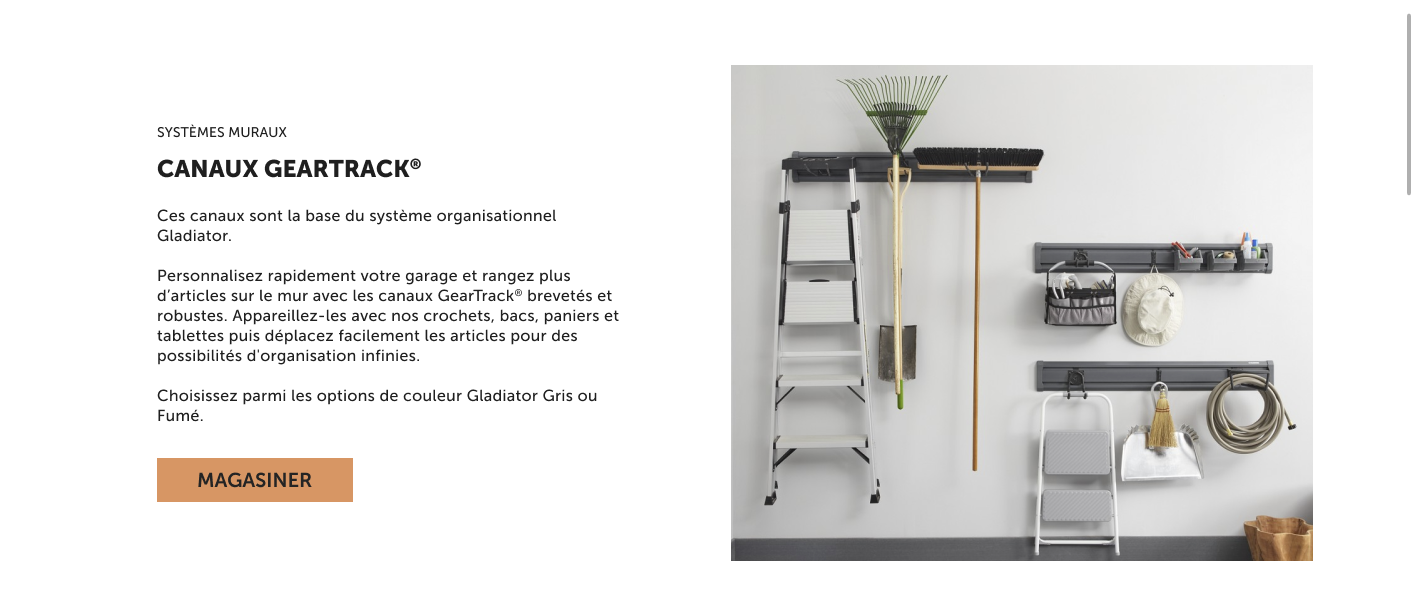
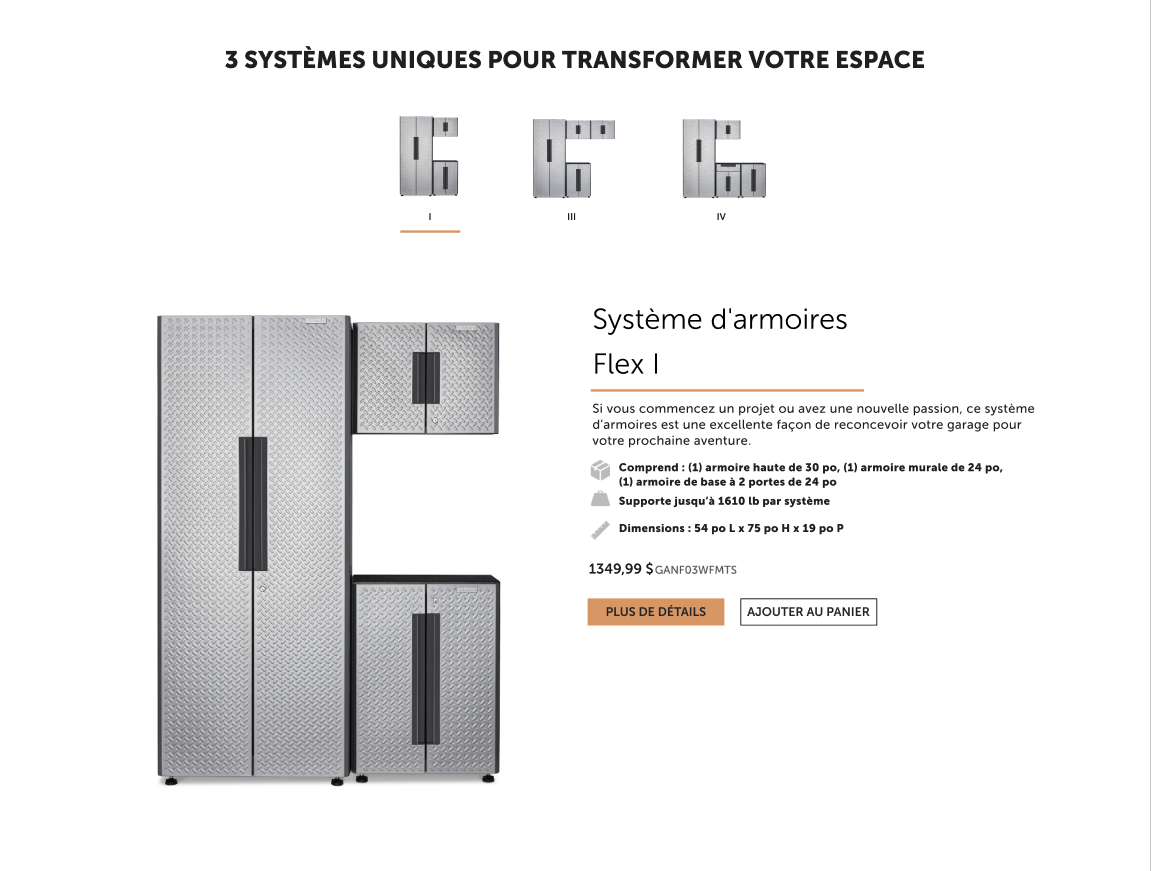
All pages were developed for Canada’s bilingual environment with layouts built to accommodate language expansion without compromising hierarchy or visual balance.
CTA language required refinement. Where English buttons used specific phrasing such as “Shop GearTrack® Packs”, the direct French translation created excessive length. A simplified label, “Magasiner”, was introduced to preserve clarity, accessibility, and visual consistency.
Bilingual execution was integrated at the structural level rather than applied as a final layer, ensuring both language versions remain cohesive and intentional.
Next Project
〰️
Next Project 〰️
